
Guitar Arpeggios: How to Escape the Scale Trap
If you’re tired of your solos and riffs sounding too much like a scale, arpeggios are how to escape the trap. Arpeggios help you make interesting note choices, sound awesome, and memorize the fretboard. Learning Arpeggios on Guitar is one of the most useful skills around, but you need to learn the Major Scale. Click here to learn more about Major Scales.
We are going to cover:
-
The Definition of an Arpeggio
-
How to Play Arpeggios on Guitar
-
A Segovia Arpeggio exercise that will help you play fast
The Definition of an Arpeggio
Arpeggios are broken chords. You take the notes of a chord and play them sequentially. A C Chord has the notes C, E, and G. A chord happens when you play those notes at the same time. An arpeggio happens when you play each note in that chord individually.
An important skill to learn for arpeggios is to know how chords are built. You probably understand how to play basic chords and barre chords. But, have you ever wondered how to make those chords? What notes define a C chord? What notes define a D chord? This matters a lot for arpeggios because we play all the notes in a chord. Chords are based on 3rd and 5th intervals. Take the name of the chord, then go up a Major 3rd and a Perfect 5th. This creates the chord. Minor chords use a Minor 3rd instead of a Major 3rd.
Understanding intervals is very important to learning how to make chords. Click here to get access to Roxy Rockin’ Guitar Blue Book to learn more about intervals.
How to Play Arpeggios on Guitar
The easiest way to start with arpeggios is to use chords you already know. Make the chord in your left-hand then play the notes individually instead of together. Finger-style players do this all the time. But, don’t just play the notes. Learn which notes are the 1, 3, and 5 of the chord. This will actually let you think about the arpeggios.
Here are the layouts for some of the most common chord arpeggios. The F chord can be used for any barre chord on the E-string. The B chord can be used for any barre chord on the A-string.
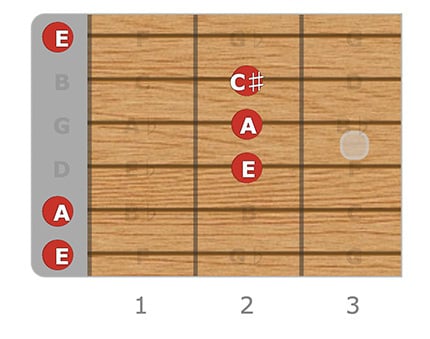
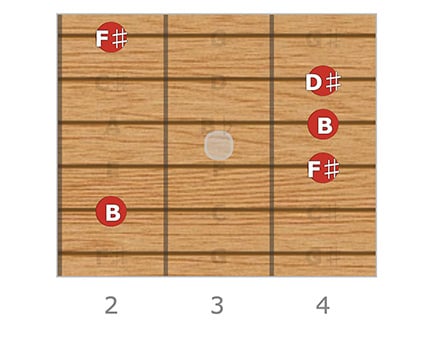
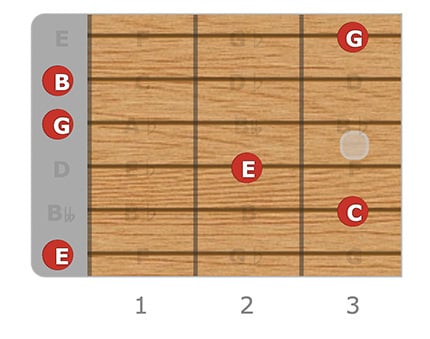
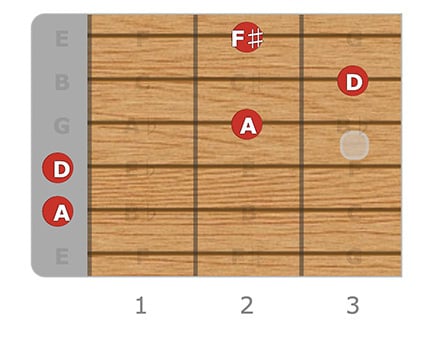
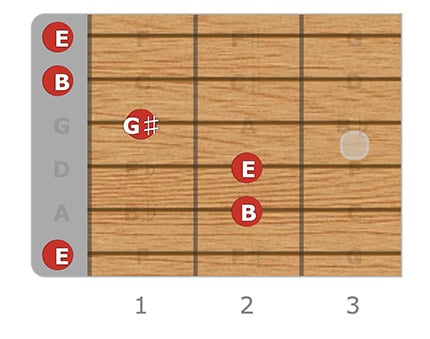
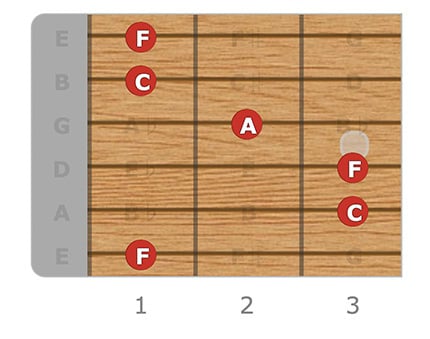
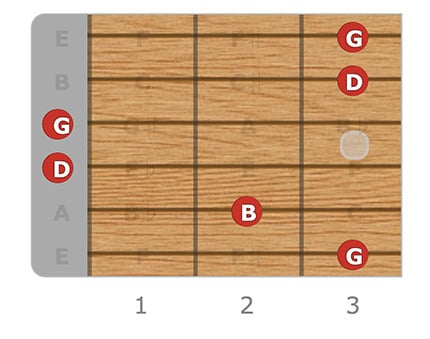
This is not the only way to play arpeggios on guitar. Each note on a 22-fret guitar has about 11 places it can be played. This means there are endless ways to play arpeggios. Here are the C Major arpeggios options within the first 12 frets of a guitar. (You can play the same spots on frets 12-24).
The way to learn these arpeggios has 3 methods.
Method 1 is to play them Up and Down. Start on the lowest string and play the notes then play all the notes until you get to the High E String. Then play it the opposite direction.
Method 2 is what I call the zig-zag method. Play up the 1st shape (Low to High). Slide up and play down 2nd shape (High to Low). Slide up and play up 3rd shape (Low to High). Keep this pattern until you get to the last shape. Then, when you get to the final shape, play the notes up and down. Finally, reverse the pattern. You should play each shape up and down when you are finished.
Method 3 is to improvise. Play a C Chord or a backing track in C and just play the notes in a C Arpeggio. Pick random notes in the arpeggio. Start on shape 1, then shape 2, etc. Once you’ve done each shape individually, start combining the shapes.
Shape 1:
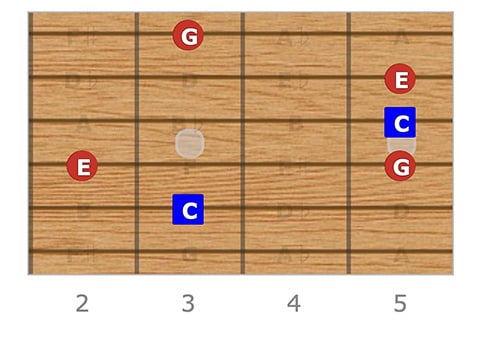
Shape 2:
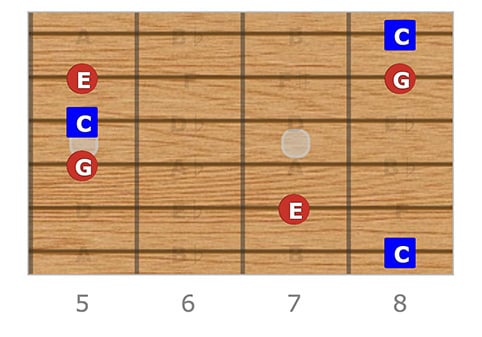
Shape 3:
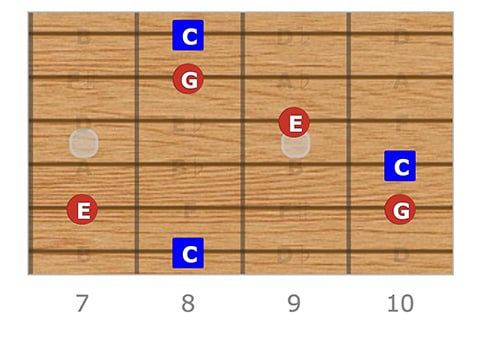
Shape 4:
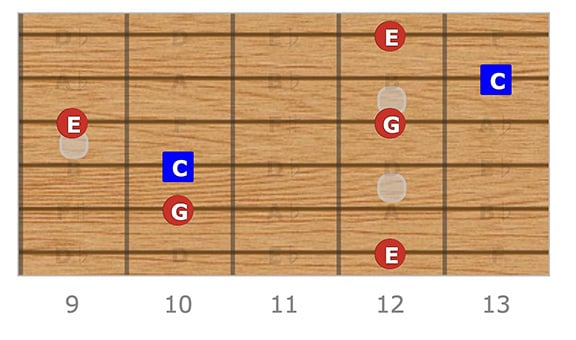
Shape 5:
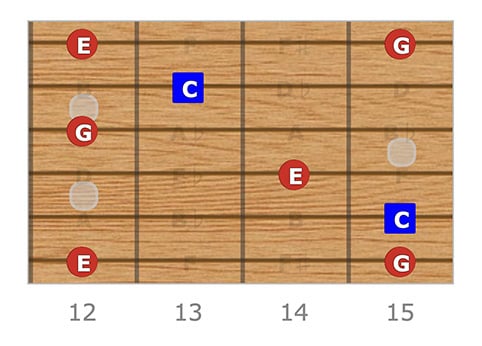
You can take these shapes and use them in any key to play any arpeggios.
Here are the Minor Arpeggios to learn even more.
Shape 1:
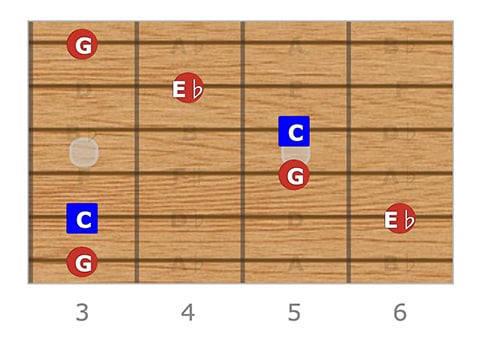
Shape 2:
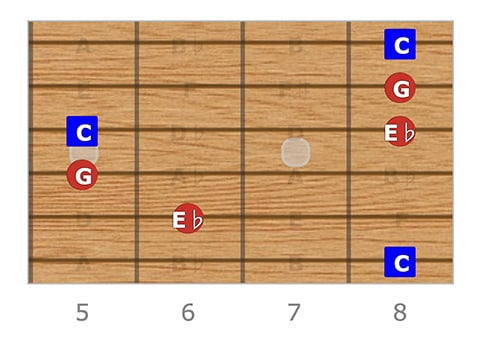
Shape 3:
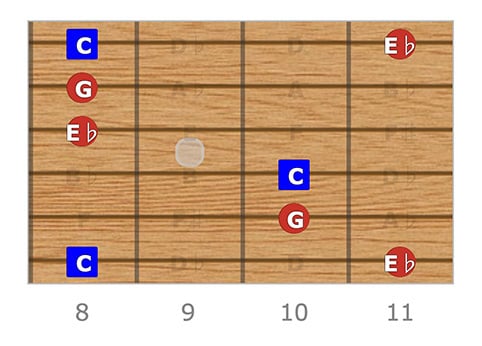
Shape 4:
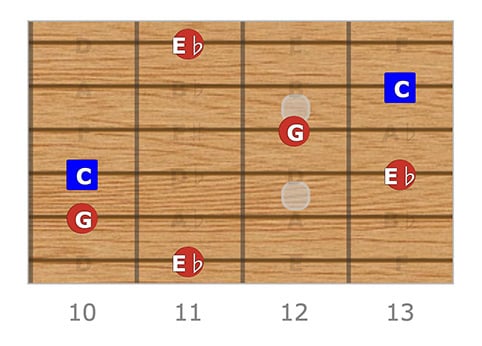
Shape 5:
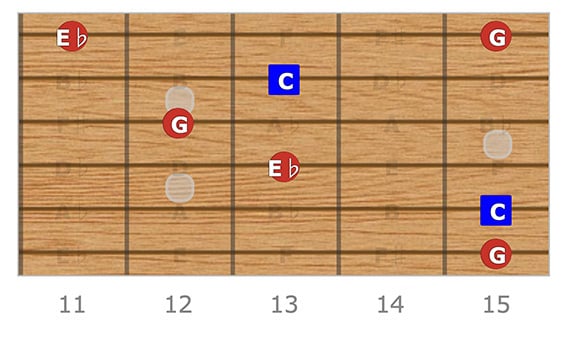
Arpeggios are difficult to memorize. They are even more difficult than scales because there are wider gaps between the notes. A trick that is helpful when learning arpeggios is to use triads. Triads are 3-note chords that you can play all over the guitar neck. Learning these triads is helpful because we can arpeggiate the triads. Click the link to learn more about triads.
Segovia Exercise to Play Faster
When I was in college, one of the best exercises I had to do was Segovia Arpeggios. They are difficult, but help increase your speed. These arpeggios are great to learn because they move up the fretboard. These arpeggios are played more like a solo than an exercise. Most arpeggio exercises don’t do that. They also help you land on a note that you are aiming at. There are many times when you have to go up a Major 3rd on the same string of a guitar without sliding. It is very difficult.
The rules: There are often notes that happen on the same strings. Do not slide. Lift your finger and pluck each note played. Alternate pick every note. Mute the strings with your right hand after you play the arpeggio. This is fast and difficult. Here are the arpeggios.
C Major:

C Minor:

F Major:

F Minor:

Bb Major:

Bb Minor:

Arpeggios will make you instantly sound like a better guitar player. These arpeggios will help you memorize the fretboard, choose notes, and play faster. So what are you waiting for?


