
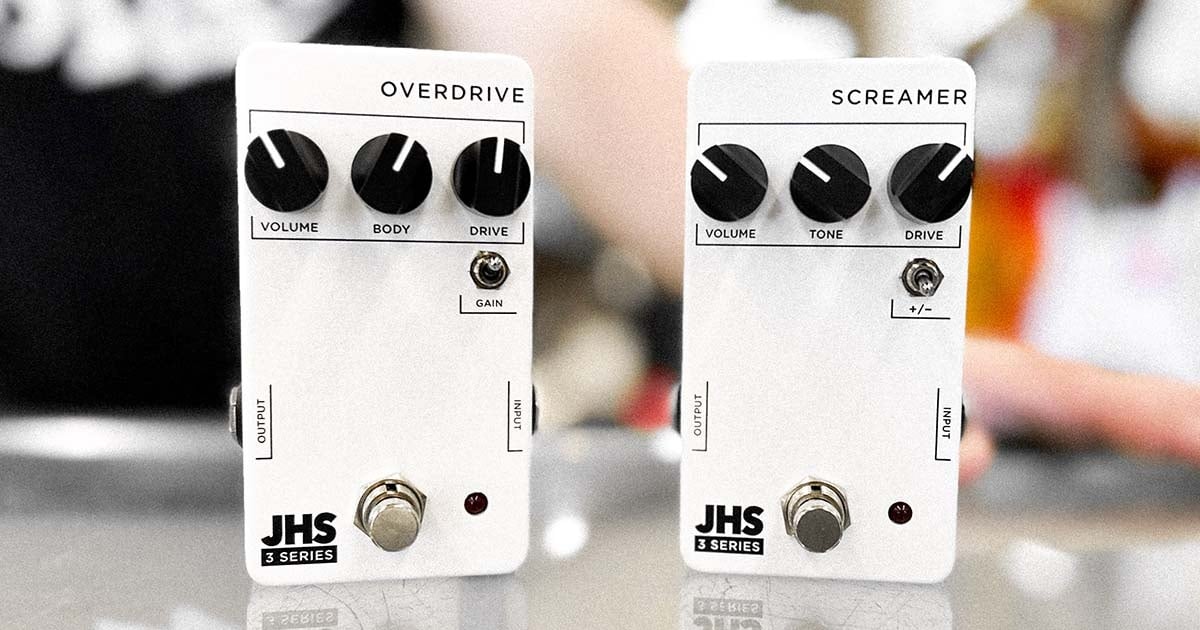
Overdrive and Distortion Pedals
Understanding Overdrive/Distortion
Have you ever dialed in distortion and just gotten overwhelmed by how nasty it sounds? Everybody loves a great distorted tone, but most people can't use it well. If you're looking for beautiful clean tones that turn into soaring leads, you're in the right place.
There are three things that will help you learn how to use overdrives
- How Overdrives Work
- How Your Playing Affects Overdrive
- Gain Staging
How Overdrives Work
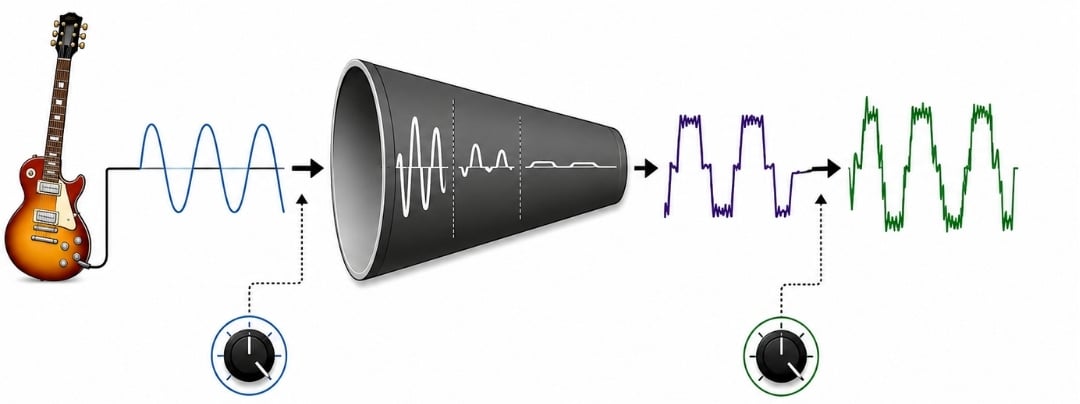
Overdrives kind of work like a funnel. There is a large amount of sound that goes in. The funnel squishes the sound. Then it comes out, and the circuit raises the volume of the new sound.
The gain knob on an overdrive pedal affects the volume of the sound before it enters the funnel. The more volume that goes into the funnel the more the funnel will distort the audio. But it won’t increase the volume that you hear. Then the funnel distorts the sound. Once it comes out, the pedal adds volume to the new sound.
This is where the volume knob comes in. The more you increase the volume, the louder it will sound. Sometimes, especially on amps, the names of the knobs get changed. The volume knob means gain and master means volume. If you don'thave a gain knob, try changing the volume or overdrive knob to increase gain. Then change the master knob to increase volume.
Many distortions often have tone knobs, EQs or both. These adjust the tone of the amp sound not the distortion level.
Here is the simple recap of how overdrives/distortions work:
Gain Knob: Increases Volume before circuit = more distortion and sustain. Set the gain knob to about noon to start.
Volume Knob: Increases Volume after the circuit = More Volume. Set the volume knob so the distorted sound is as loud as your clean sound. Turn off the pedal and play something. Then turn it back on and play it again. They should be about the same volume.
Tone Knob: Works like a tone knob on guitar. The higher it is, the brighter it sounds and vice versa.
EQ: Like a tone knob, but controls lows, mids, and highs separately. Most players cut their mids when playing alone — but turn them up in a band. It's how you cut through the mix. Learn More about Guitar Midrange.
Here are some distortion and overdrive pedals with this layout:
[products=blog_ts9]
[products=Plumes]
[products=blog_pureboost]
How Your Playing Can Affect Overdrive
Now that you understand how a distortion pedal works, you can make awesome tones. The best way to make great tones is to change your playing to affect the drive level. If you turn the drive level to a reasonable level, you can change the distortion level by how you play. Here's why. The gain knob increases the amount of volume that goes into the funnel. But if you increase the amount of volume going into the funnel with your playing, it will distort more.
The higher the gain the less dynamic it will become. The more you increase the gain, the less effect the volume of your playing has on the sound.
Here are some overdrives that handle dynamic playing very well:
[products=charliebrown]
[products=violet]
Gain Staging
Now how do we handle more than one pedal?
Gain Staging is a term musicians use to talk about how to manage multiple levels of overdrive. Overdrive is in sound consoles, pedals, guitar amps and so much more. The simplest explanation is how do you manage more than one funnel. Here is an example of 3 overdrives next to each other:
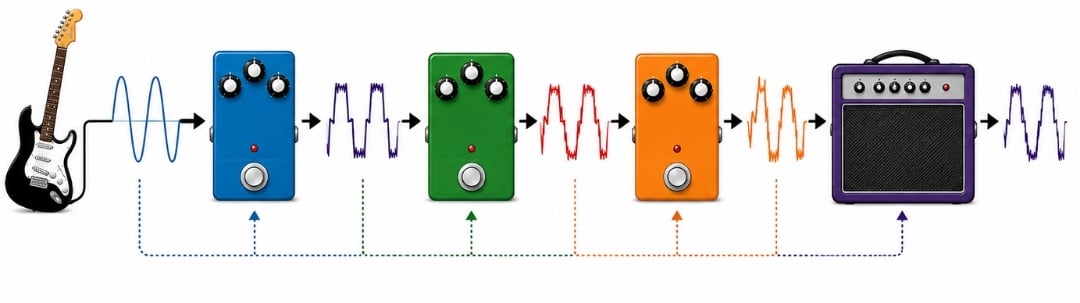
The image shows that the output volume from the first overdrive goes into the input of the 2nd overdrive. This means that the volume knob on an overdrive going into another overdrive acts like a gain knob. However if the 2nd stage is off, you still need the volume.
Amps work the same way as pedals. If you send more input level into the amp, it will still squish the signal to create more overdrive. So, you need to treat the amp like another funnel.
Here’s how to handle gain staging. Play your setup clean without pedals. Then add a pedal. The volume should be about the same. Then add your 2nd pedal and do the same thing. This will ensure clean gain staging.
You can turn your last overdrive louder than the rest. This will cause more distortion in the amp but will make your solos and leads pop out easily.
If you want a clean boost, you want to put it after each gain stage. If you are using an amp, they will often have effects loops for this very purpose. If you are using modelers, put the boost after your amp model. This can be done with digital models or on a pedalboard.


